Showing posts with label Bright Eyes. Show all posts

Monday, January 20, 2014

Songs for a Snowfall


We New Jerseyans and New Yorkers might get a foot of snow tomorrow, so what better time for a wintry playlist?  Let these excellent tunes accompany your shovelling, snowball fights, and/or (spiked?) hot chocolate drinking.  The snowy soundscapes presented here range sonically and emotionally, capturing the many paradoxes--stillness and movement, warmth and frigidity, renewal and death, love and despair, youth and experience--that winter embodies.  Enjoy, and stay warm!

1. Bon Iver - "Blood Bank." A song about falling in love in winter: And the snow started falling; we were stuck out in your car.  You were rubbing both my hands, chewing on a candy bar.

2. Bright Eyes - "Gold Mine Gutted." Beginning as a love story, this song ends by describing a lover's possibly fatal drug addiction: Only smoke came out our mouths on all those hooded-sweatshirt walks. ... All those white lines that sped us up; we hurry to our death.  Well, I lagged behind, so you got ahead.

3. Kanye West - "Street Lights." Whereas the other two of Kanye's "lights" songs ("All of the Lights," "Flashing Lights") are celebrations of his fame and success, "Street Lights" captures an isolated and despondent West, who turns a cab ride (in what feels to me like a snowy New York) into an existential journey: I know my destination, but I'm just not there.

4. LCD Soundsystem - "Someone Great." The song's cold, brooding, mechanical sounds epitomize not only LCD's album title, Sound of Silver, but also the numbness one feels after losing "someone great": There shouldn't be this ring of silence, but what are the options when someone great is gone?

5. Explosions in the Sky - "Snow and Lights." Moving from heavy snowstorms to light flurries back to a climactic blizzard, "Snow and Lights" lives up to evocative its title without saying a word.

6. Vampire Weekend - "Step."  (See the post below): They didn't know how to dress for the weather.  I can still see them there huddle on Astor: snow falling slow to the sound of the master.

7. Minus the Bear - "Hooray."  Describing a snowball fight and "warming on alcohol" in bars, "Hooray" celebrates youth--or acting youthfully--and the weather that brings out our joyful qualities: It's cold, and snow's actually on the ground of this no-snow town.  And instead of cars, streets [are] trafficking in sleds.  Men become boys again.

8. Crystal Castles (feat. Robert Smith) - "Not In Love."  Synths are ideal for capturing frigid sounds, but the sleety waves of synthesizers here are especially effective--and appropriate for Smith's unfeeling exclamation, "I'm not in love." 'Cause it's cold outside; when you coming home?  'Cause it's hot inside; isn't that enough?

9. Arcade Fire - "Neighborhood #1 (Tunnels)."  The imaginative opening lines from Arcade Fire's debut remain among the group's best poetry: And if the snow buries my neighborhood ... Climb out the chimney and meet me in the middle of the town.  And since there's no one else around, we let our hair grown long and forget all we used to know.  Then our skin gets thicker from living out in the snow.

10. The XX - "Shelter."  "Shelter" reminds me of watching snow fall from behind a pane of glass: the separation between coldness and warmth is thin.  This song's warm guitars and Croft's shaking, almost insecure voice shatter that barrier, allowing these conflicting feelings to coexist in an unsettling love song: I find shelter in this way: undercover, hideaway.

11. Bright Eyes - "Something Vague."  Conor Oberst epitomized so many of my adolescent winters that he gets to make two appearances here.  On what may be his angstiest, but also one of his finest, albums, a young Oberst quivers as he paints a sad portrait of an alcoholic: You see your breath in the air as you climb up the stairs to the coffin you call your apartment. And you sink in your chair, brushing snow from you hair, and drink the cold away.  And you're not really sure what you're doing this for, but you need something to fill up the days.

12. The Good Life - "A Golden Exit." The final song from The Good Life's Novena on a Nocturn represents both bitter ends (of relationships, even of life) and cathartic renewals: I can feel the chill in the air between us.  I can feel a winter coming; we're frozen in our stares.  ... I woke up this morning to the silence of falling snow.  These graces of beauty have left me so cold.

Friday, June 21, 2013

May Mixtape


Highlighting the songs I've discovered, rediscovered, or repeatedly played each month. The order reflects an attempt to create a cohesive mixtape, not to rank the songs in any way.


1. Daft Punk feat. Panda Bear - "Doin' It Right."  After a month of listens, I'm still unsure if Daft Punk's newest album is as great as everyone makes it out to be.  I definitely don't think Random Access Memories matches the brilliance of Discovery; there's no "One More Time" or "Digital Love" on here, not even an "Aerodynamic."  There are, however, some true standouts, especially the sensual "The Game of Love" and the funky, endlessly catchy "Get Lucky," which is rightfully claiming its spot as the 2013's go-to summer anthem.  But the first song I heard after "Get Lucky" was "Doin' It Right," whose gargled, robotic vocals immediately had me hooked--even as I struggled to register the unlikely pairing of Panda Bear and Daft Punk.  The combo does work, though, producing tremendous results, as PB's breezy vocals float over the track's looped noise and tiptoeing keys.  The chorus is brilliant and timeless, and probably speaks to the transcendent experience of DP's live show: "If you lose your way tonight that's how you know the magic's right." Yet the song is also tinged with sadness, as the robot occasionally sputters "You're not doing it right," perhaps critiquing the current state of EDM or, even, lamenting music's inability to consistently conjure the "right" magic for its listeners.

2. James Blake - "I Am Sold." I was so excited for James Blake's new album, and I feel like my expectations were half-met: "Retrograde" is Overgrown's centerpiece and one of JB's best songs to date, "Overgrown" begins the album with a powerful slow-burner, and "I Am Sold" has the most wonderfully sinister bass line Blake's produced yet.  But man, is "Take A Fall for Me" horrible, or what?  I don't know how Blake allowed such a cheesy song on his album, or why the album slumbers on the second half, but it's a shame to see him experiment so successfully and disastrously on the same album.  Talk about risk/reward.  I do keep returning to "I Am Sold" for its fragile vocals, hazy, smokey-room atmosphere, and that amazing bass line, though.  Hopefully Blake will select tracks more wisely on his third album.


3. The Menzingers - "Burn After Writing."  I have this very untested theory about pop-punk and emo: while emo bands often exaggerate drama and exploit their fan's fragile emotions, pop-punk bands are more direct and sincere.  Pop-punk is also not as whiny and narcissistic as emo generally is, even though pop-punk's lead-singers often sound like pre-pubescent boys.  The Menzingers certainly don't sound like that (the vocals are deeper), but everything else (the multiple guitars, speedy drums, bouncy chorus) epitomizes pop-punk.  And you know what?  It's a great genre.  It brings me back to the happy times of my adolescence and still sounds fresh enough that I want to make new memories to it.  Thanks for the recommendation, Nick Parco.

4. Bright Eyes - "Beginner's Mind."  I was  skeptical of any new Conor Oberst material after some very insipid side-projects (Mystic Valley Band, Monsters of Folk) and the alarmingly uneven Cassadaga, so The People's Key came as a wonderful surprise.  I think "Beginner's Mind" is my favorite track from the album because Oberst sounds so damn interested, unlike some of his detached narratives from Cassadaga ([don't] see the god-awful "Classic Cars," whose title should be enough evidence of Oberst's indifference).  It's been awhile since Oberst has sounded this sincere and has sung with such urgency, and the result is a more mature--or less whiny--version of Oberst's Fevers and Mirrors material, when he would gasp through each note as if it would be his last.  Here he pleads to a "beginner's mind" to remain innocent and not conform to "all those tangled hypocrites," which may be Oberst revisiting his past mistakes as he returns to his former singing style.  Maybe.  But anyway, this song is one of Oberst's most contagious (and that's saying something); I hear it once and then need to listen to it for a few weeks until it finally leaves my mind.


5. Vampire Weekend - "Ya Hey."  I did not love Modern Vampires of the City when I first heard it, and I think that's the point: VW's third album challenges its listeners by defamiliarizing conventional pop structures, offering, for instance, squirrelish vocals in place of the chorus on "Ya Hey."  I had no idea what to do with this song when I first heard it; sure, it starts off brilliantly, with Koenig's clear vocals echoing over a lightly foggy backdrop, but that chorus seemed like a buzzkill, interrupting the flow of an otherwise crisp and catchy song.  And the spoken interlude seemed like a deliberate attempt to withhold the song's most gratifying elements: the funky bass, ghostly chants, and Koenig's perfect delivery.  Yet the gratifying elements kept me returning, and eventually the things I didn't like became strangely addicting.  Maybe this is the way to keep ephemeral pop fresh and interesting, as the song ages for the listener with time?  I'm not sure.  I am sure, however, that I'm reluctant to play this song in front of friends because they might 1) not like it and 2) ask questions that I really can't answer: "What the hell is this squirrel doing?"  "Why is the singer talking?"  So I'll enjoy this one by myself, searching for answers while also enjoying the unexpected pleasures of this hunt.

6. The National - "Fireproof."  Woah, this was a treat.  I was first struck by this song during one of my commutes from a rainy Lincoln Center; as I was exiting my subway station, I felt immediately taken in by Matt Berninger's haunting vocals and that heavily ominous bassoon, which drops like an earthquake when Berninger sings "you're fireproof." The finger plucking guitar recalls the pianos from Boxer's "Abel," but the dark mood of this song--heightened by an allusion to Elliott Smith's devastating "Needle in the Hay"--raises comparisons to "Mistaken for Strangers" and "Afraid of Everyone."  Only here the drums are subdued, tempered like the passions of the mysteriously "fireproof" subject.

7. The National - "Sea of Love."  Bryan Devendorf's brilliant drumming is more prominent on "Sea of Love," possibly my favorite song from this excellent album.  (What a great month for music!)  I first heard "Sea" when I watched its charming video, which interestingly captures both the intensity and claustrophobia of the National's music.  Yet "Sea of Love" is, as its title suggests, free-roaming, an expansive anthem that reminds us, especially when juxtaposed with "Fireproof," of the incredible emotional range of this incredibly emotional band.

Thursday, December 6, 2012

November Mixtape

Highlighting the songs I've discovered, rediscovered, or repeatedly played each month. The order reflects an attempt to create a cohesive mixtape, not to rank the songs in any way. 


I've written ten of these this year, so I'm not going to falter this late in the game.  Hopefully writing this will distract me from checking my email neurotically/growing increasingly hateful.  So, with one month to go(!), here are the sounds to my November:

1. Bright Eyes - "Time Code."  I went jogging one night to clear my head and escape my research paper, and listening to Digital Ash in a Digital Urn--Bright Eyes's audacious, experimental electronica album--really helped me escape myself for a little bit.  I always appreciated the album's opener, "Time Code," but I was especially struck this time by Oberst's sung/whispered line: "sh-- don't talk, don't talk." I think it's interesting how the song becomes instrumental after that, as Oberst silently hovers over the world his album will subsequently explore: we hear the screaming baby from "Ship in a Bottle," murmurs from the crowds from which Oberst withdraws, and the bells from "Gold Mine Gutted."  While the intro could be foreshadowing or previewing the album's songs, I think it's more about picking up transmissions of "noise."  (Note: thinking about Don DeLillo's White Noise completely changed my interpretation of this song).

DeLillo shows how our consumerist, media-saturated society worships commodities and replaces religion with shopping.  Compare, for instance, the everyday activities of people living in a Puritan versus a postmodern culture: the former observed God everywhere and in everything, while the latter observes the hyper-saturation of advertisements and media.  Because we are incessantly bombarded with TV, ads, radio, media, etc., we begin to speak unconsciously its language of consumerism: the media has altered our consciousness.  I think Oberst sees this, and his opening song is a fantasy about escaping the world's noise (ironically on his noisiest album to date).  Thus, on "Time Code," we can only hear bells, screams, or murmurs, not the tainted language of postmodern culture.  This retreat from spoken language is intriguing since Oberst is so renowned for his songwriting -- maybe he's trying to escape himself, too.  But then the alarm clock rings and it's back to reality; he must speak.  And probably not coincidentally, his next words are: "It was Don DeLillo."

Tuesday, January 24, 2012

Top Albums of 2011, 11-6

11.  Bright Eyes - The People's Key.  After a very uneven 2007 release in "Cassadaga" and a 4-year hiatus, Bright Eyes return with a surprisingly solid album, given how spotty Oberst's side projects had been.  Oberst really sings on "The People's Key," sounding as confident as ever -- and for good reason: his lyrics, though now much more abstract than emotional, remain some of the best of our generation, and his voice has developed so he can now harmonize better than ever.  Moreover, after the grandiose "Cassadaga," Mike Mogis displays some much-needed restraint in the studio, focusing more on melodies than worldly soundscapes.  What follows are some of the catchiest songs Oberst's ever produced, with "Beginner's Mind" perhaps his band's greatest triumph.  "The People's Key" may conclude Bright Eyes' stellar, near-15 year catalog, and, if that's the case, Oberst ends his inspirational, prolific, and influential project on a high note.

10.  Kanye West and Jay-Z - Watch the Throne.  I have a major problem with songs "featuring" other artists.  I feel that more often than not the meaning of the song is compromised when another person adds in his/her verse.  Often when the featured guest tries to stay on the song's theme, he/she oversimplifies it or drops a cheesy metaphor to ruin the listening experience (see: Young Jeezy in Drake's "Unforgettable" or Lil Wayne in Drake's "The Real Her" for examples).  But when Kanye and Jay Z, two of the biggest names in the music industry, recorded "Watch the Throne" together, I was intrigued, albeit a little skeptical.  When I listened to the album, though, I heard a collection of loud, witty, brilliantly produced songs that seemed like neither Ye's nor Jay's individual work, but something that melded their two styles together: it was distinctly theirs.  You know its Kanye and Jay on radio hits "Ni***as in Paris" and "Otis," but you can also tell the songs come from "Watch the Throne:" Jay motivates Kanye to rap harder than ever, while Kanye challenges Jay's recent lyrical/instrumental complacency.  Besides being able to hear two prolific artists changing their style to make something great, it was most enjoyable to hear Ye and Jay competing with each other, ricocheting lines off each other in "Otis" or even trying to be the most introspective and, surprisingly,  vulnerable on "New Day."  Perhaps after accomplishing so many individual accolades, Jay and Ye needed to record together for inspiration.  Kanye and Jay seem to not only encourage but also to threaten one another; these guys have always been known for both their egotism and paranoia ("they want me dead," Jay admits on "Why I Love You"), so it's not inconceivable that the rappers are watching each other to protect his (however imagined) throne atop the rap/hip-hop world.

9.  Frank Ocean - Nostalgia, Ultra.  I actually wrote my first blog post on Frank Ocean's "There Will Be Tears," the ninth track off his debut mixtape.  I discussed Ocean's heart-on-sleeve honesty and poetic craftsmanship, which surprised me knowing his affiliation with Odd Future.  That basically can sum up this amazing, surprisingly endearing mixtape, as Ocean's lyrical craft and impressive ear for beats make "Nostalgia" a thoroughly enjoyable listen.  True to its title, Ocean's mixtape encompasses a wide range of feelings: the happiness, sadness, jealousy, anger, naivete, lust, and heartbreak we can vividly remember from our past.  Nostalgia emerges in the first track, where Ocean re-imagines Coldplay's "Strawberry Swing" to sing about lost love and youth during war: "When we were kids / We handpainted strawberries on a swing / Every moment was so precious then / I'm still kicking / I'm daydreaming on a strawberry swing."  That's pretty much the poem I tried to write throughout high school--it both annoys and amazes me how Ocean perfects the poetic imagery and emotions I've been searching for in five lines.

The album's nostalgia persists throughout: even the instrumental tracks, which are mainly the clicking and hissing of cassettes, are named for old NES video games.  Yet the distant past also becomes an immediate future; Ocean accesses his memories to make something timely (or timeless) and real, like on the poignant opener.  Additionally, Ocean samples instrumentals like "Strawberry Swing," "There Will Be Tears," and MGMT's "Electric Feel" to reinvent them--taking from the sometimes very distant past to create something uniquely his own.  Never does this become more apparent than of "American Wedding," which borrows from the Eagles's "Hotel California."  Ocean details a young lust/love and hasty divorce, concluding, "It's an American wedding; / They don't mean too much. ...We had an American wedding / Now what's mine is yours, American divorce."  Ocean continues by begging, "Don't break my heart / This wedding ring won't ever wipe off," only to admit: "But if you stay, girl if you stay / You'll probably leave later anyway / It's love made in the U.S.A."  Once Ocean's disillusion peaks, the guitar solos begin, sounding as if they were written for this exact moment.  The song no longer feels like a cover or a borrowed instrumental; it becomes Frank Ocean's--a remarkable feat for a song whose instrumentals are firmly planted in the rock-n-roll canon.

Ocean's original work is just as compelling; the gritty beat of "Novacane" and ominous piano and bass on "Lovecrimes" mark some of the album's standouts.  "Swim Good" is my newest favorite; there's a sense of urgency to it although the song doesn't seem to try to sound overly urgent, even as Ocean threatens "to drive in(to) the ocean."  It's hard to describe.  Ocean's music simply has many natural qualities to it.  When music is this honest, nothing feels forced.

8.  The Weeknd - Echoes of Silence.  The third mixtape released this year by the mysterious R&B artist, The Weeknd, dropped only a few days before Christmas, so I haven't had a lot of time to digest it all yet.  Which is probably a good thing: this collection contains the grimmest tales the Weeknd has told yet--not exactly ideal for getting into the holiday spirit.  Look no further than "Initiation," where the Weeknd's falsetto croons devolve into deranged, goblin whispers, which maliciously inform a drugged-up girl: "I got a test for you / Baby, you can have my heart / There's just something that I need from you / Is to meet my boys."  Pitchfork claims the song is about gang-rape, which doesn't seem all too farfetched, considering the song's violent, propulsive beat.  What is most disturbing is the song's catchiness despite its violence and cruelty; it seems perfectly appropriate for an insatiably voyeuristic American audience, which overlooks (or stampedes) morality/ethics to pry into the lives of celebrities.  We make nobodys into celebrities just to know everything about them (see: Jersey Shore) and we love to watch people fall.  The Weeknd appeals to these American vultures, first showing us the idealized party that mainstream music glorifies, then dragging us to the reality of O/Ds, false love, and the most intense suffering--showing us all the steps that lead to "the fall."

There's so much more to say about this album: its lyrical and musical cohesion, its place in the trilogy of mixtapes, and the freakin' perfect cover of Michael Jackson's "Dirty Diana."  This is quickly emerging as my favorite Weeknd album, but since I'm supplementing this information in January, I will leave my rank as is. 
 
7. Real Estate - Days.  It seems trendy and hipsterish to pick P4K's BNM's "Days," but as soon as I heard the pensive chimes and washed-out reverb on opener "Easy," I became hooked on Real Estate's breezy sound.  NJ's Real Estate have what I always considered to be an "indie" sound: moody, often brooding pop that is simplistic but meaningful.  Why I had such a precise definition of one of the most amorphous genres around today is beyond me, but hearing RE's music brought me back to "easier" listening "days" when I was first discovering independent music and hearing sounds I seemed to be searching for all my life.  Some journalists are trying to sell bullshit about how RE's music is Springsteen-esque--that it captures some NJ ethos.  But that's not really the appeal to this music (hell, I live in Jersey and don't hear a Jersey sound or influence).  What is great about "Days," though, is its cool, laid-back simplicity; you can easily get lost in the sprawling guitars and low-key vocals or you can bang out the drum beat to "It's Real."  Real Estate doesn't seem to want to fit in with the lo-fi, SO-CAL "chillwave" movement that's trending on indie blogs; their music, much like Frank Ocean's, seems to just flow naturally without trying to conform to a style or trend.  It's genuine and unadorned music--or, simply, "it's real."
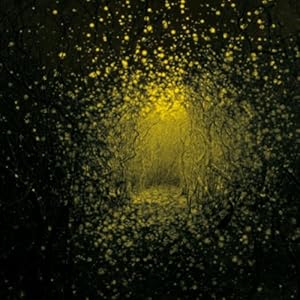
6. The Antlers - Burst Apart.  After seeing them nearly steal the show while opening for Explosions in the Sky, I knew I needed to devote some serious listening time to the Antlers's newest album.  While it doesn't live up to their live experience, where the group lets their songs flow into long but tight jams, "Burst Apart" presents some of the richest musical tapestries I've heard in a long time.  The group's large dynamics and haunting vocals on "No Windows" and "Parentheses" stand out as exemplars.  And when the band chooses minimalism on the closer "Putting the Dog to Sleep," the staccato guitar strikes end the album on an emotional high, as the dog-imagery throughout the album culminates in the painful lines, "Prove to me  I'm not gonna die alone... / Don't lie to me, if you're putting the dog to sleep."  I've listened to this album dozens of times and I'm just starting to unravel the lyrics; it's so easy to get absorbed in the album's soundscapes, paired with its impeccable pacing, that it almost makes the group's acerbic lyrics an afterthought.  Which is great: an album this good should require dozens of spins, and constantly finding/hearing new things make the experience all the more enjoyable.

Monday, August 8, 2011

August 8 - The Center of the World; An Attempt to Tip the Scales


I've been having really intense reactions to music lately, so it's no surprise that Conor Oberst's heartwrenching lyrics have been resonating stronger than ever. Listening to music during emotionally turbulent times is an interesting experience; sure, there are always moments when you're unhappy, happy, indifferent, etc., but when you have a specific reason for those feelings--a concrete lens/context to hear music through--your senses become heightened in new ways. This is how you can gain different insights to songs you may have heard hundreds of times, (re)discovering how subjective music really is. For example, I never really cared for Cursive's "A Red So Deep" until I heard it while struggling to comprehend someone's infidelity; suddenly the lyrics cut like daggers, as Kasher vindictively whispers:

Are you satisfied tonight, oh, trader's wife?
Does he neglect you?
Crawling bar stools and touching the girls
As you wash their smell from his clothes.

I still have a hard time listening to the song; it's a permanent part of my history, capturing a time when I was really down on the world. Still, though, experiences like this show how magical music can be: as the listener matures, sounds/words/meanings illuminate themselves in new ways. Just like literature, good music isn't obvious; it takes an active listener to reap all of a song's benefits, even if the "benefit" is heartache. Which leads me to Bright Eyes.

Fevers and Mirrors is the perfect album for the brooding adolescent, probably because it was made by a brooding adolescent. Ironically, through my teens I never had as strong of a connection with Fevers as I had with Oberst's other works (Digital Ash and I'm Wide Awake, especially). But during a long car ride at night, where I futilely attempted to avoid mopey music, Fevers lured me with its misery.

Regardless of the context, "The Center of the World" always hits me like a ton of bricks. To be honest, I never really took the time to interpret the song, but I've always felt startled when Oberst wails, "Two pills just weren't enough /The alarm clock's going off / but you're not waking up. /This isn't happening, happening, happening, / happening, happening. It is." The narrative describes a man in love with a hardened woman, symbolized by a statue, whose life is mundane ("you drive home to your place / from that job that makes you sleep"), full of despair ("the thoughts that keep you awake"), and ultimately intolerable, resulting in her overdose.

Like much of Oberst's early work, the song fixates on drugs leading to a figurative or literal death; here Oberst hovers over the loved one's corpse, screaming incredulously that this "isn't happening," only to wail in a chilling realization that "it is." The alarm clock ringing to an unmoving body paints a harrowing image, one that seems so real and possibly so imminent for anyone that knows someone struggling with drugs. Whereas a song like "A Line Allows Progress, A Circle Does Not" details the sordid life of a drug addict, "Center" emphasizes the persons affected by the user's addiction, expressing the rage and sorrow when a beloved one dies from a preventable death.


However, "An Attempt to Tip the Scales" might be the most painful song I can listen to right now, as Oberst sings unfortunately relevant lyrics:

So we trade liquor for blood in an attempt to tip the scales.
I think you lost what you loved in that mess of details.
They seemed so important at the time but now you can't even recall
Any of the names, faces, or lines; it's more the feeling of it all.

The song ends with a message of hope--"so close to dying that I finally can start living"--and a beautiful collage of keys and strings, something to cling to when everything seems like it's falling apart.